
Letter from the Chair
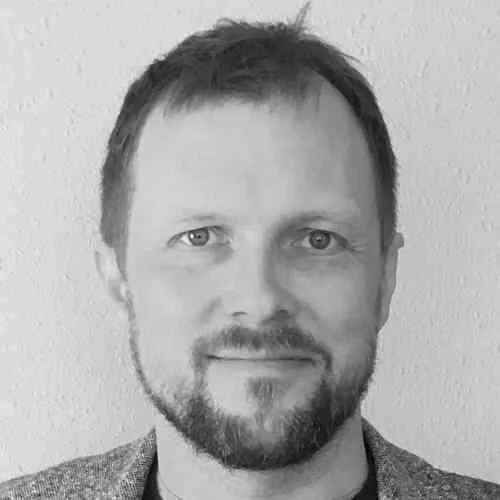
Ross Centers, Founder and Chair
Seven years ago, the Planetary Sunshade Foundation began with a nod to Asimov, dedicated to solving the greatest challenge of our time: turning tools of the space age toward managing impacts of the Anthropocene on our home planet.
In the same seven years, the world has gone from receiving the UN’s report on 1.5C, through taking none of the actions required to avoid crossing that planetary boundary, to experiencing the reality of global warming beyond that limit. Even so, as we face crossing 2.0C in a few short years, political will to limit greenhouse gas emissions has evaporated.
Our work is no longer hypothetical. Civilization faces a binary choice in our lifetimes: to face a world warming well over 2.0C or to deploy sunlight reflection methods to cool Earth’s climate. Tomorrow’s policymakers will face this choice armed with the solutions being developed today.
We seek to answer the question: “how could the world build a planetary sunshade?” The answer to our question is multidimensional along engineering, scientific, and political axes. Our mission is to provide coherent answers that provide executable choices for policymakers.
There is an emerging consensus that sunlight reflection methods should be developed as technology options in the next decade. In 2024, global funding for sunlight reflection technology grew to $30M dollars, compared to $1.25B for carbon removal and $2T for emissions reduction. Clearly, sunlight reflection is at the very beginning of the development curve.
At this stage in our field’s development, the most critical decisions are about defining the scope of the field. When we began our work, the National Academies reports on sunlight reflection were actively pushing sunlight reflection from space out of scope, leaving the nascent field defined as an atmospheric intervention.
It is due to the work of our broader sunshade community, many of you reading this letter, that sunlight reflection from space is beginning to establish itself in scope for climate intervention policy consideration. I am incredibly grateful for all of your work, as we are collectively moving the needle at this inflection point in history.
We are also at an inflection point in the Planetary Sunshade Foundation’s development. This year, ARIA’s grant support is allowing us to formalize an engineering inventory of planetary sunshade architectures, and connect them to modeled climate outcomes. We are coordinating with many of you to fill in key research gaps, and publish the findings for inclusion in the next IPCC report which will for the first time feature a serious look at sunlight reflection methods.
As part of this funding, we have been able to make a full time position for our Executive Director, Morgan Goodwin. Morgan’s expertise in building coalitions for climate has been critical in bringing us to this point in our history, where we find our community in a position to bend history toward a good Anthropocene and a morally grounded future in space.
Ross Centers
Chair of the Board, Planetary Sunshade Foundation