
Space Reflector Baseline Survey - Boulder Workshop
The Planetary Sunshade Foundation’s ARIA grant team met in Boulder for our second in-person workshop.
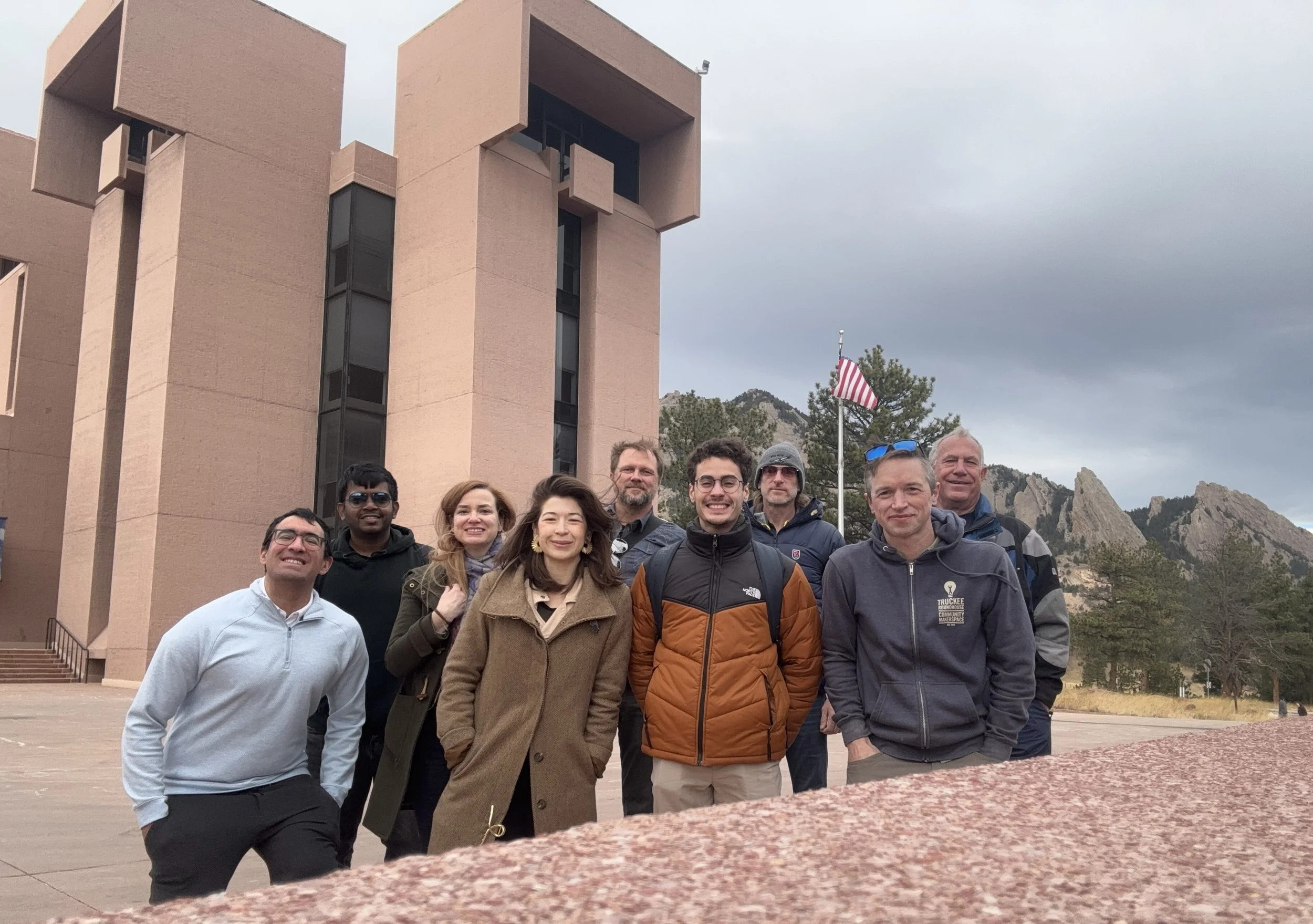
The team outside the Mesa Lab, the flagship of the National Center for Atmospheric Research
We can’t wait to share published results with you at the Nottingham workshop and in our publications. This post is to give you a sense of how we are attacking these problems.
The first day of the workshop was all about climate science. We heard an update of the modeling work we’ve accomplished thus far. We dug deep into the nuances of how the final modeling will incorporate all known variables of shading, orbital motion, etc. We met with several NCAR staff to explore the code of the climate model itself and how to incorporate sunshade needs. We explored the selective wavelength dynamics. This collaboration between the climate science and engineering teams continues to be fruitful.
Our second day was dedicated to the engineering design review. Several outside advisors joined via zoom to hear presentations on how to construct a seasonally variable sunshade array, a transmissive sunshade array, materials to achieve selective wavelength outcomes, and low earth orbit configurations. This review allowed us to see scope of engineering options much more clearly.
The final day focused on the next steps. We mapped out the workflow for the final four months of the grant project, through our publishing goals and presentations. Much work remains, but the path forward is clear.
It was impossible to ignore the intense uncertainty that NCAR and all the researchers are feeling regarding the possibility of the institution being shut down. In January, the National Science Foundation published a letter detailing its intent to "restructure" NCAR and sought "input from agency partners and the research community on the scope of work currently performed” there. The scientific community has been united in its support for the research center. Over 37,000 people have signed a petition hosted by the American Geophysical Union to protect it.
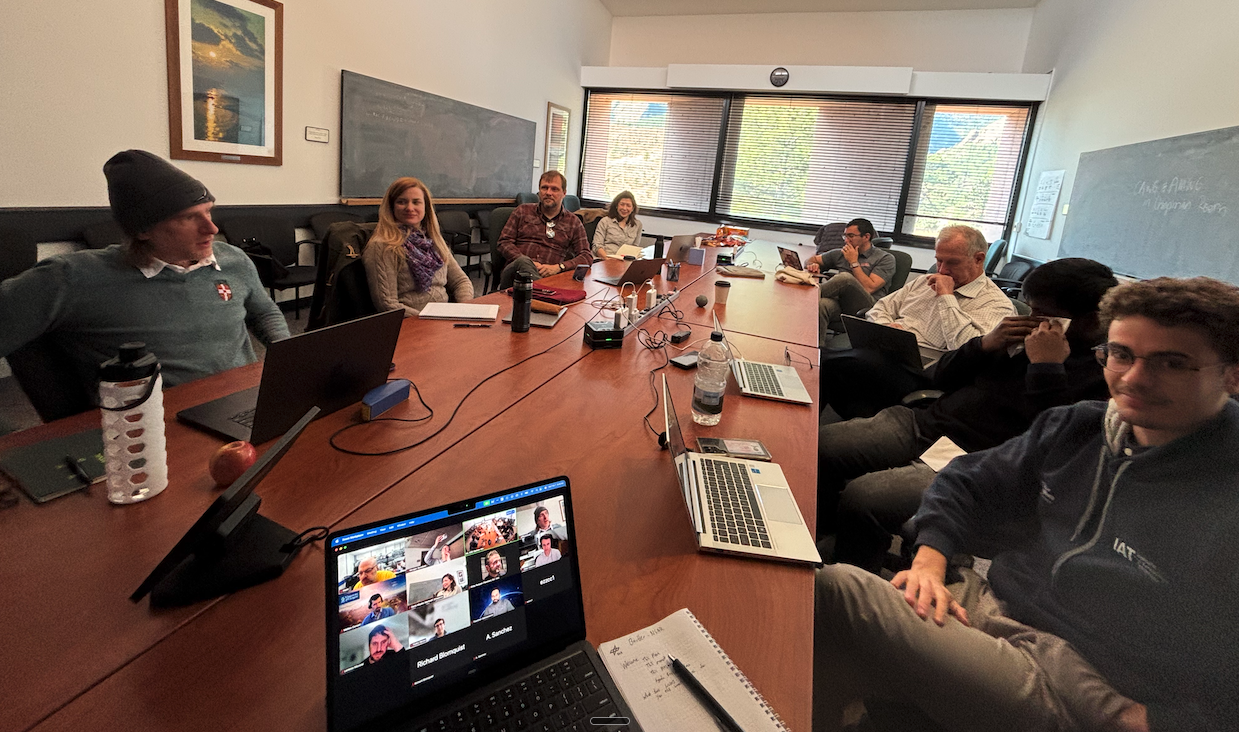
Photo of our team hard at work.